CiberKit Nº 8 · June 2026: 5 cybersecurity tools
Five projects that can help you work smarter.
Every month, new tools, repositories, and projects emerge that reveal where cybersecurity is really heading.
And if there’s one thing becoming increasingly clear throughout 2026, it’s this:
The real advantage in cybersecurity is no longer having more tools. It’s knowing which tools actually deserve a place in your toolkit.
The speed at which threats evolve forces security professionals to continuously optimize their workflows. It's no longer just about collecting resources—it's about finding tools that help you work faster, gain more context, and make better decisions.
In this edition, we've selected five projects that stand out for improving key areas such as:
- 🔒 Privacy and configuration validation
- 🕵️ Threat Intelligence and investigations
- 🔎 OSINT research
- 🚨 Detection Engineering and SOC operations
- ⚡ Active Directory assessments
🔒 MyIP
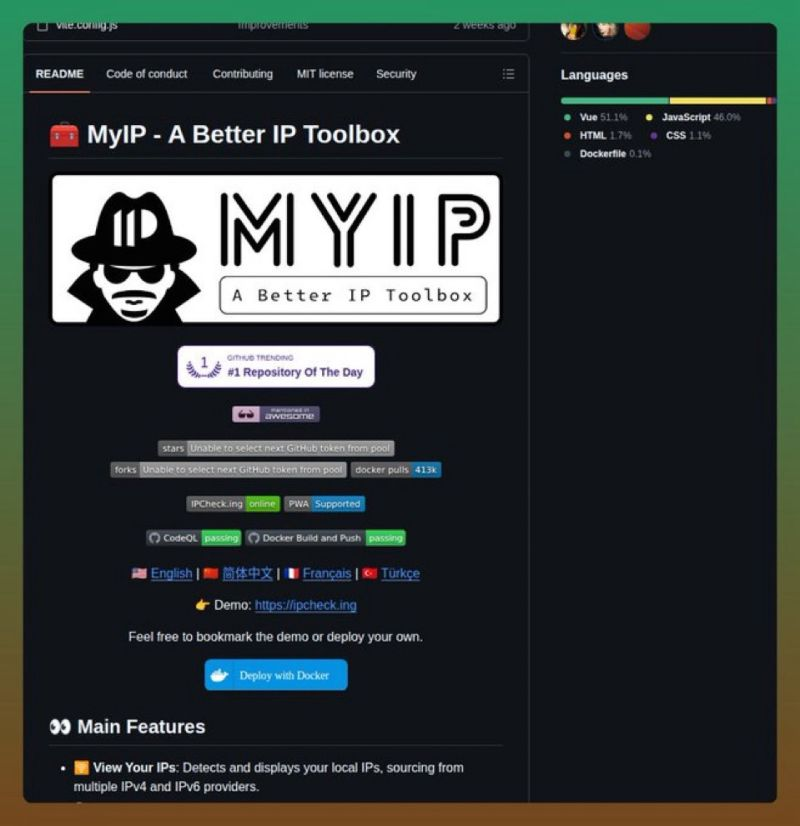
Is Your VPN Really Protecting Your Privacy?
Turning on a VPN doesn't automatically mean your information is fully protected.
DNS leaks and WebRTC leaks can expose details about your connection without you even realizing it.
That's why MyIP caught my attention.
It’s an open-source, self-hosted platform that allows you to quickly verify exactly what information your network is exposing.
Key Features
- 🌐 Displays your public IP address
- 🔍 Detects DNS leaks
- 📡 Detects WebRTC leaks
- 🩺 Performs network diagnostics
- 🏠 Self-hosted and open source
Why It Matters
In cybersecurity, there's one rule that rarely fails:
Never assume you're protected. Verify it.
Many users trust their VPN provider without ever validating whether their traffic is actually secure.
Tools like MyIP help security professionals, system administrators, and privacy-conscious users confirm that their privacy configurations are working as intended.
Repository: https://github.com/jason5ng32/MyIP
Category: Privacy & Network Diagnostics
Ideal for: Security professionals, system administrators, and privacy-conscious users.
👀 Threat Actor Usernames
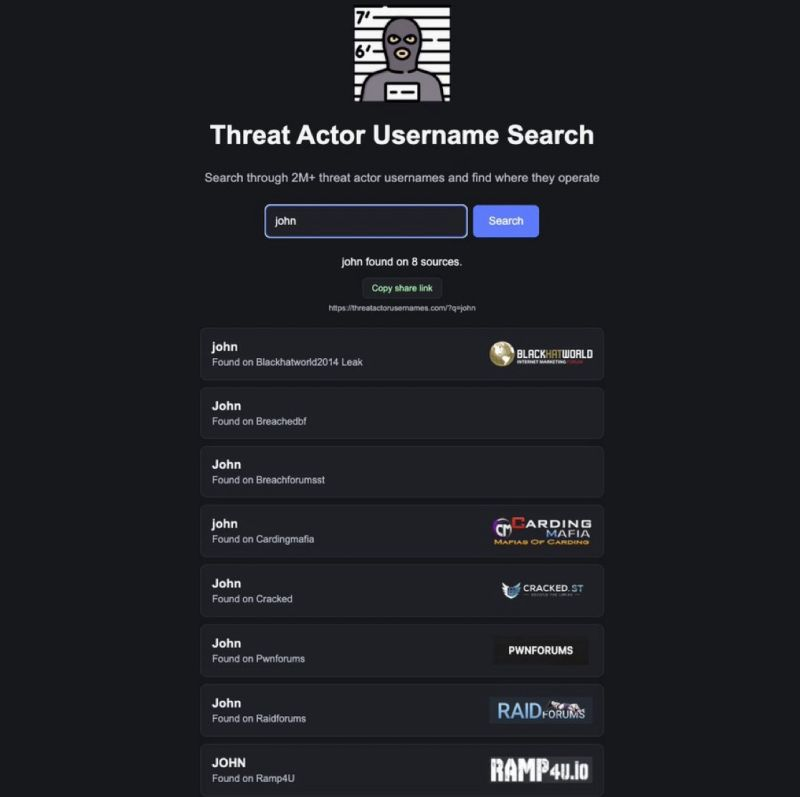
Find Threat Actors Through Their Aliases
Sometimes, a simple username is the missing piece in an investigation.
Threat Actor Usernames allows you to search through more than two million usernames and quickly discover where an individual or threat actor may have a presence online.
Ideal For
- 🕵️ OSINT investigations
- 🎯 Threat Intelligence
- 🔎 Threat Hunting
- 🛡️ Cybersecurity investigations
Why It Matters
Attribution often starts with small clues.
A reused username can:
- Connect identities across platforms
- Reveal hidden infrastructure
- Expose relationships between actors
- Generate entirely new investigative leads
Instead of spending hours searching manually, investigators can gain valuable context within seconds.
Website: https://threatactorusernames.com
Category: Threat Intelligence & OSINT
Ideal for: CTI analysts, investigators, and Threat Hunting teams.
🕵️ Legendary OSINT
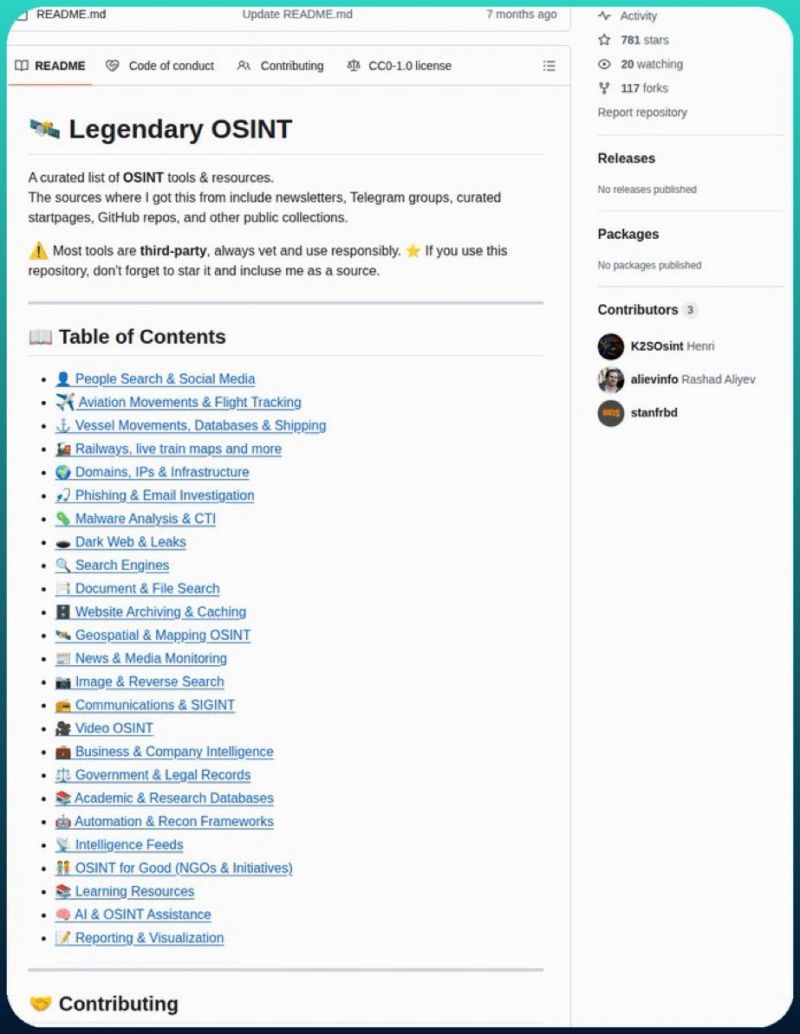
The Biggest Problem in OSINT Is Having Too Many Tools
The challenge in OSINT is no longer the lack of resources.
It's having too many of them.
Every week, new tools appear to investigate:
- People
- Domains
- Infrastructure
- Data breaches
- Companies
- Cryptocurrencies
- Social media
Eventually, most professionals end up with:
❌ Hundreds of bookmarks.
❌ Dozens of open browser tabs.
❌ Hours wasted trying to remember which tool solves which problem.
That's where Legendary OSINT comes in.
A curated repository of tools and resources specifically designed for:
- 🔎 Fraud investigators
- 🕵️ CTI analysts
- 💰 KYC and AML teams
- 📰 Investigative journalists
- 🛡️ Cybersecurity professionals
Why It Matters
In investigations, time is critical.
Being able to move from a hypothesis to actionable evidence in minutes can make the difference between solving a case—or losing an important lead.
Repository: https://github.com/paulpogoda/Legendary-OSINT
Category: OSINT Resources & Investigations
Ideal for: Investigators, CTI analysts, journalists, and fraud teams.
🚨 Awesome Threat Hunting
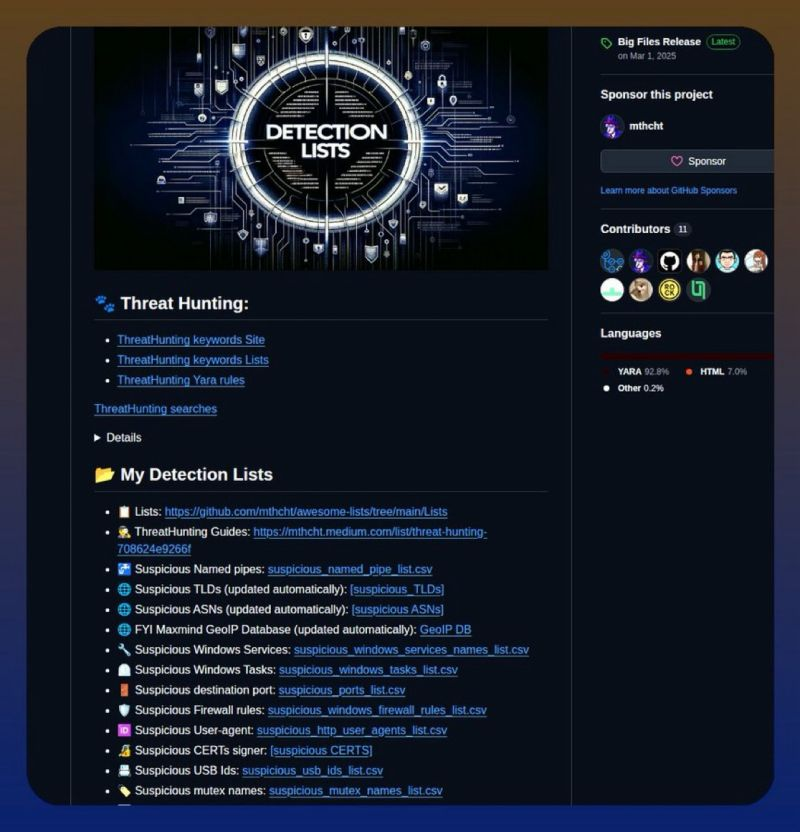
Great Detection Starts With Knowledge
When an alert arrives in the SIEM, the difference between investigating it in five minutes or two hours often comes down to one thing:
Context.
Malicious IP addresses.
Phishing domains.
YARA rules.
Malware indicators.
MITRE ATT&CK techniques.
The problem isn't that this information doesn't exist.
The problem is knowing where to find it.
Awesome Threat Hunting brings together hundreds of resources for:
- 🎯 Threat Hunting
- 🛡️ Detection Engineering
- 🔍 IOC repositories
- ⚔️ MITRE ATT&CK and D3FEND resources
- 📊 Splunk, Elastic, and Microsoft Defender
- 🚨 Malware and ransomware indicators
- 🔵 Blue Team and SOC operations
Why It Matters
Many organizations invest thousands of dollars in advanced security tools.
Yet they still struggle to answer a basic question:
What should we actually be looking for?
Repositories like this help bridge that gap.
Because great detections don't start in the SIEM.
They start with knowledge.
Repository: https://github.com/Hunters-for-Threats/Awesome-Threat-Hunting
Category: Threat Hunting & Detection Engineering
Ideal for: SOC analysts, Blue Teams, Detection Engineers, and DFIR professionals.
⚡ ADScan
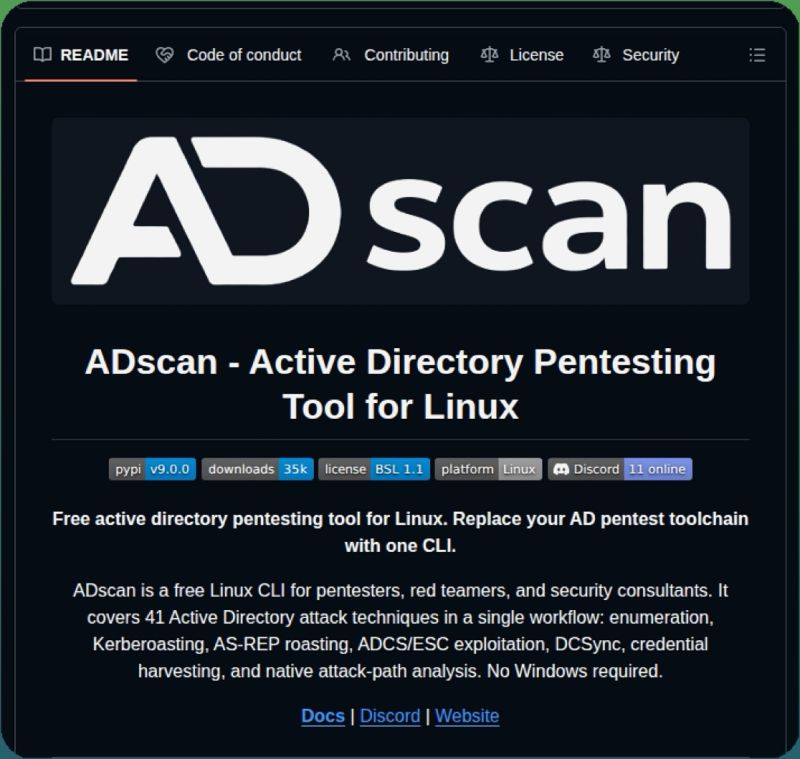
More Than 40 Active Directory Attacks From Linux
Active Directory remains one of the most attractive targets for attackers.
Yet many professionals still rely on multiple tools to perform assessments.
ADScan brings more than 40 offensive techniques together in a single framework.
Key Features
- 🎯 Kerberoasting
- 🎯 AS-REP Roasting
- 🎯 DCSync
- 🎯 ADCS attacks
- 🎯 BloodHound integration
- 🎯 Advanced Active Directory enumeration
- 🎯 More than 40 offensive techniques
Why It Matters
One of its biggest advantages is that it runs natively on Linux, making it ideal for assessments, labs, and Red Team engagements without constantly depending on a Windows environment.
The project reflects a broader trend within offensive security:
Consolidating multiple capabilities into unified platforms to improve efficiency and reduce operational complexity.
Repository: https://github.com/CobblePot59/ADScan
Category: Active Directory Security & Red Teaming
Ideal for: Pentesters, Red Teams, and Active Directory security assessments.
📌 This Month's Takeaways
This month's projects highlight several important trends across the cybersecurity industry:
✅ Privacy verification and configuration validation.
✅ Faster Threat Intelligence investigations.
✅ Specialized and curated OSINT resources.
✅ Better Detection Engineering and SOC operations.
✅ More complete Active Directory offensive frameworks.
The evolution of cybersecurity is no longer about having more tools.
It's about reducing friction, automating repetitive work, and spending more time on analysis and decision-making.
Because in the end, the best tools aren't necessarily the most popular ones.
They're the ones that help you work smarter.
📩 Enjoy This Type of Content?
Every week, I share cybersecurity tools, OSINT resources, automation projects, AI applications for security, training labs, repositories, and practical resources that genuinely provide value.
👉 Subscribe to my free newsletter:
https://brunosalvatella.com/newsletter
My goal is simple:
Filter out the noise and share only the projects and resources that can genuinely help you learn, investigate, and work more effectively in cybersecurity.
See you in the next edition. 🚀