CiberKit Nº 11 · October 2026: 5 cybersecurity tools
A new selection of cybersecurity tools and projects I came across during September.
Every month, hundreds of new cybersecurity tools, repositories, and projects are released.
Some disappear after a few weeks. Others end up becoming tools you keep using over and over again.
This month, I picked 5 tools that caught my attention for different reasons: OSINT, reconnaissance, pentesting, web security, and automation.
Let’s get into them 👇
01 — 🕵️ OPENOSINT
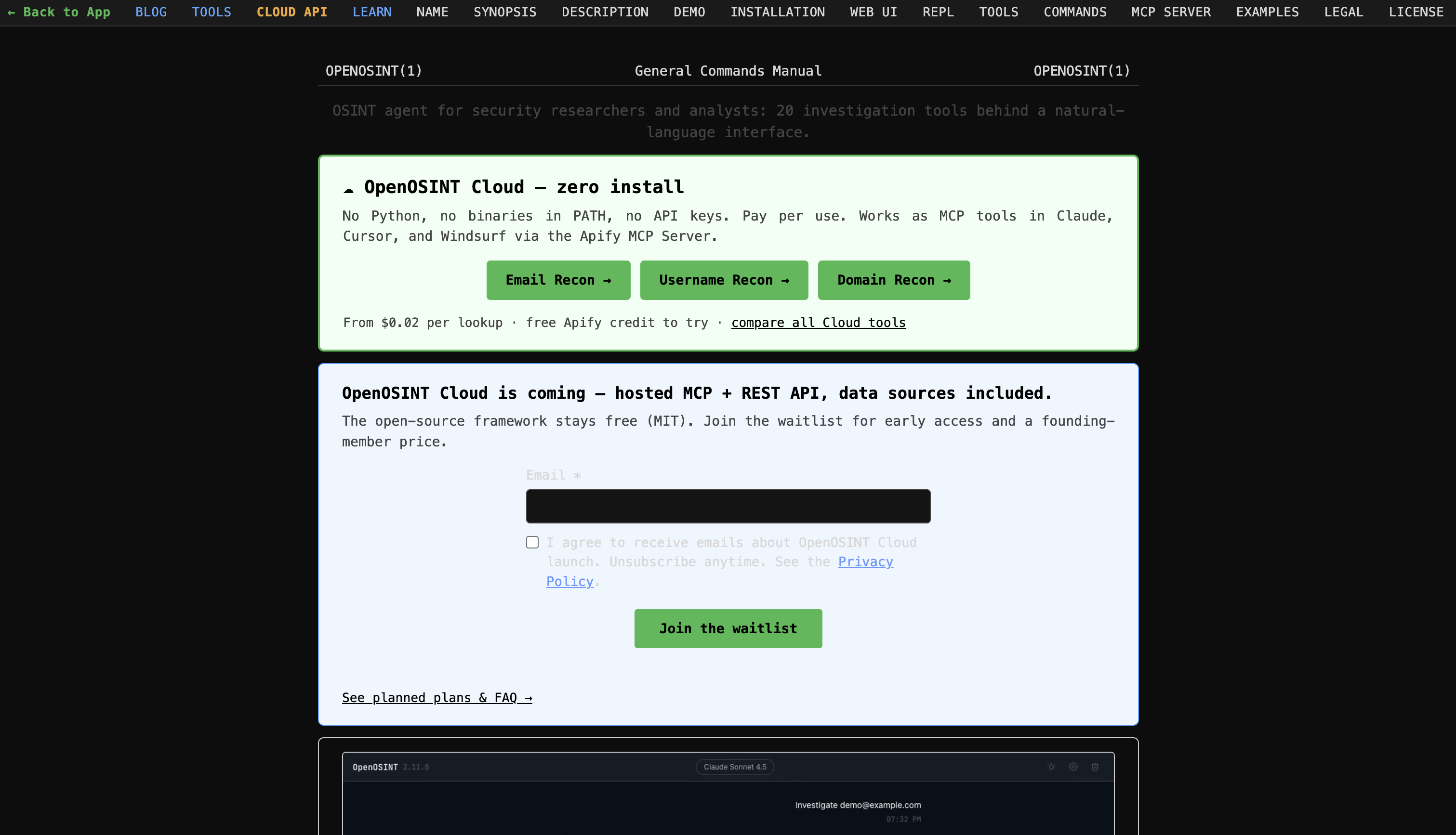
Automate your OSINT investigations
If you do OSINT, you probably end up using a lot of different tools to gather information about a target.
OpenOSINT tries to bring a lot of that process together.
It includes different modules for investigating:
→ Domains
→ IPs
→ Emails
→ Usernames
→ GitHub
→ DNS
→ Infrastructure
It can also connect with different sources such as Shodan, VirusTotal, and Censys.
One of the things I like about it is that you can use different tools within the same workflow instead of constantly jumping between different websites.
🔗 github.com/OpenOSINT/OpenOSINT
💡 Best for: OSINT, reconnaissance, and threat intelligence.
02 — 🔎 FLOWOSINT

55 modules for reconnaissance
When you start an investigation, one of the first things you need to know is what you're actually dealing with.
FlowOSINT brings together dozens of modules that can help during the first stages of reconnaissance.
You can use it for different types of searches related to:
- 🌐 Domains
- 🔍 Subdomains
- 📡 Infrastructure
- 👤 Public information
- 🔗 URLs
- 🛡️ Vulnerabilities
The idea is pretty simple:
enter a target → run different modules → collect information.
And that's exactly what makes it useful to have in your toolkit.
🔗 github.com/Achint9639/FlowOsint
💡 Best for: reconnaissance, OSINT, and bug bounty.
03 — 🗂️ ROBOBACK
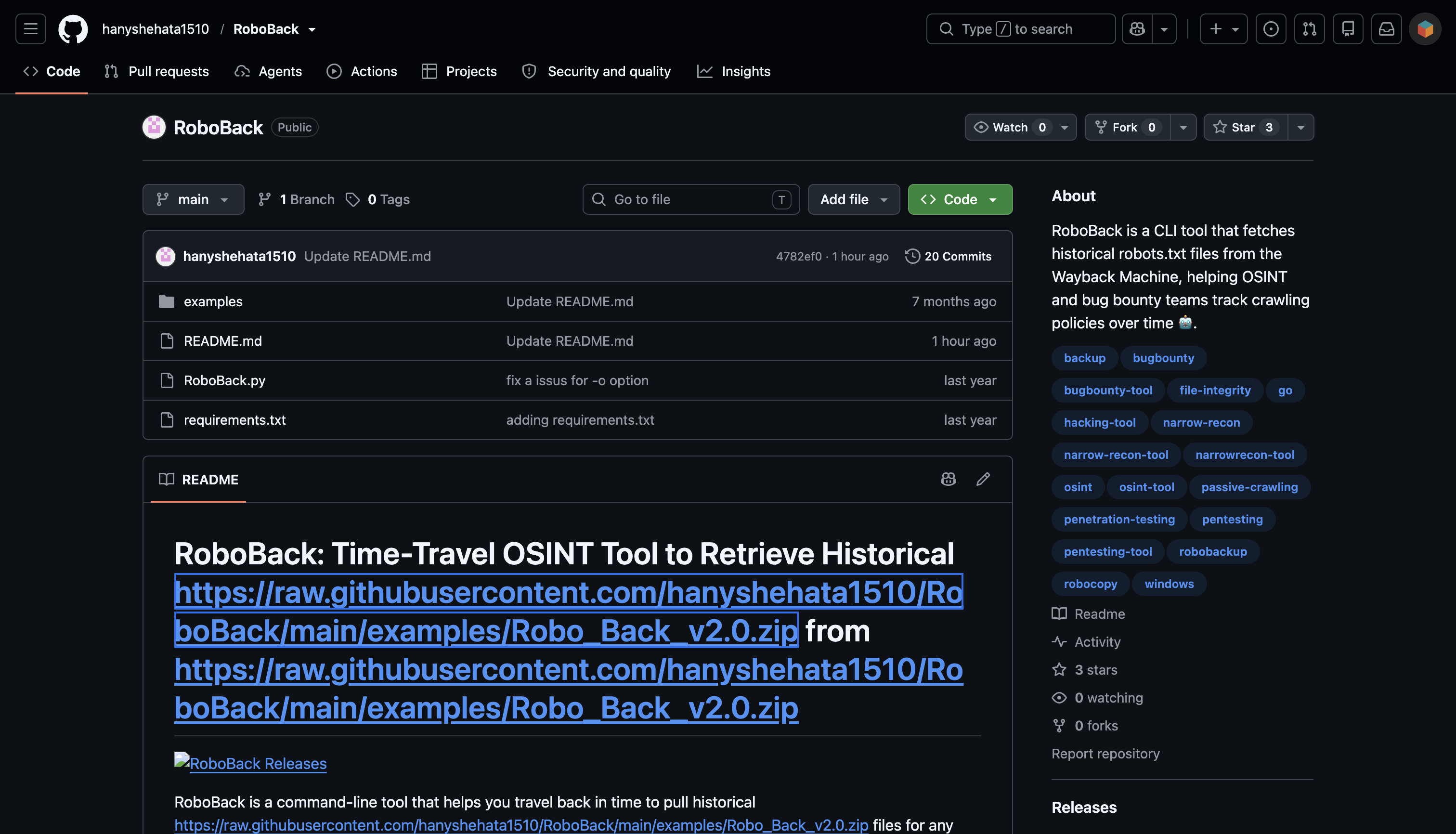
What did a website expose years ago?
This is probably one of the simplest tools on the list.
And that's actually why I find it interesting.
RoboBack lets you retrieve older versions of a website's robots.txt file using the Wayback Machine.
Why can that be useful?
Because websites change all the time.
A directory that doesn't appear today might have been publicly listed years ago.
For example:
/admin/
/backup/
/dev/
/internal/
may have appeared in older versions of the file.
RoboBack makes it easier to go back and check that history.
🔗 github.com/hanyshehata1510/RoboBack
💡 Best for: OSINT, reconnaissance, and bug bounty.
04 — 🦉 STRIX
Automated pentesting with agents
This is the one tool on the list that is more directly related to AI, but that's not really the main reason I included it.
Strix aims to automate different parts of a pentesting workflow.
It can analyze applications, investigate potential vulnerabilities, run tests, and help validate the results.
Instead of simply showing you information, it tries to follow an actual investigation workflow.
That makes it interesting if you want to experiment with new ways of automating security tasks.
🔗 github.com/usestrix/strix
💡 Best for: web pentesting, AppSec, and bug bounty.
⚠️ Only use it on systems you own or have explicit permission to test.
05 — 🌐 SHANNON
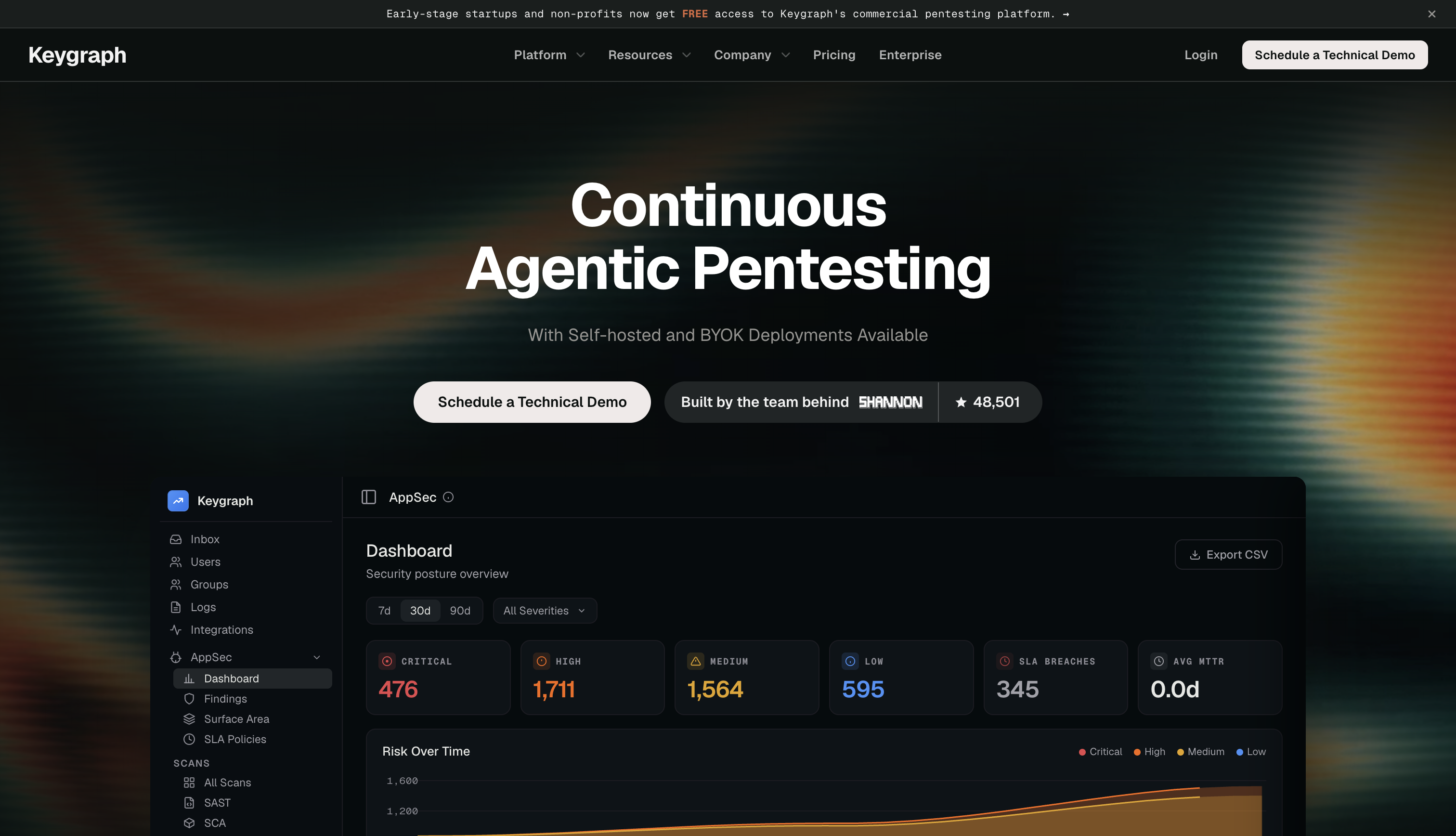
From analyzing an application to actually testing for vulnerabilities
Let's finish with another interesting project for Web Security.
Shannon is designed to analyze web applications and APIs and look for potential vulnerabilities.
One of its more interesting features is that it tries to go beyond simply finding a possible issue:
it also tries to validate it.
This makes it useful for experimenting with different approaches to application security testing.
The project also received several updates and improvements during September.
🔗 github.com/KeygraphHQ/shannon
💡 Best for: AppSec, web pentesting, and security research.
⚠️ Only use it on applications you have permission to test.
That's IT for this MONTH'S
And that's it for this month's CiberKit.
Every month I try to do pretty much the same thing: go through new repositories, tools, and cybersecurity projects and pick a few that I genuinely find interesting.
Not every tool needs to be brand new.
And it definitely doesn't need thousands of GitHub stars to be useful.
Sometimes a small tool that does one specific thing really well can end up being much more useful than having another 50 tools sitting on your machine.
So if one of the tools in this edition caught your attention, give it a try, play around with it, and see if it fits into your workflow.
And if you've found a tool that should be featured in the next CiberKit, send it my way. I'm always looking for new projects for the next editions. 👀
You want MORE? 👀
CiberKit of the Month doesn't stop here.
Throughout the month, we share cybersecurity tools, resources, news, and interesting projects across our channels.
If you want to know when the next CiberKit is out, discover tools before they make it into an edition, or simply find interesting cybersecurity content during the month, follow us here:
💬 Telegram
Cybersecurity tools, resources, and interesting finds shared regularly.
👉 https://t.me/brunosalvatella
📸 Instagram
Shorter content, tools, recommendations, and cybersecurity updates.
👉 https://instagram.com/ciberkitdelmes
💼 LinkedIn
We also share tools, resources, and cybersecurity & technology content on LinkedIn.
👉 https://linkedin.com/in/brunosalvatella
🧰 See you in the NEXT one
If you've made it this far, thanks for reading another edition of CiberKit of the Month.
Save this edition if you want to come back to these tools later, and share it with someone who might find it useful.
And remember:
You don't need to know 1,000 tools.
You need to know the ones that are actually useful to you.
See you next month with more tools. 🔥
CiberKit of the Month
Less information. Better information.